Egg Substitutes in Baking: 12 Options with Exact Ratios
Replace eggs in any recipe with the right substitute. Comparison table of 12 egg substitutes for binding, moisture, and leavening — with exact ratios per egg.
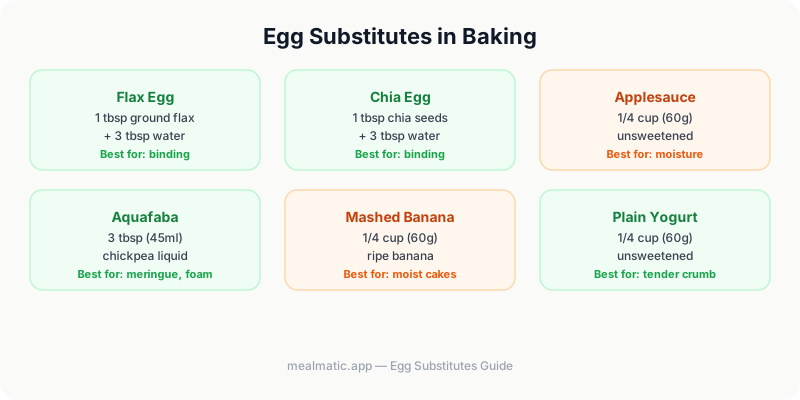
Egg Substitutes in Baking: 12 Options with Exact Ratios
Eggs do four jobs in a baking recipe, and each one needs a different replacement. They bind ingredients, add moisture, leaven the batter, and emulsify fats with liquids. Swap them with the wrong substitute and you get gummy brownies, dense muffins, or a cake that sinks in the middle.
Most “1:1 egg replacement” lists ignore the basic food science: a flax egg cannot whip into a meringue, applesauce will not bind a cookie that has barely any flour, and aquafaba is the only thing that turns into stiff peaks. The right swap depends entirely on what the egg was actually doing in your original recipe.
This guide covers 12 substitutes with exact measurements, what each one excels at, and where each one fails. If you also want to convert recipe measurements between cups, grams, and milliliters while you adapt your recipe, our calculator handles ingredient density automatically.
What Eggs Actually Do in Baking
A whole egg is roughly 75 percent water, with proteins concentrated in the white and fats plus lecithin in the yolk. When you heat the proteins, they denature and form a network that gives baked goods their structure — that is the binding function. The water in the egg turns to steam during baking, which adds a small leavening lift. Beaten egg whites trap air mechanically, creating the foam that lets angel food cakes and meringues rise. And the lecithin in the yolk holds fats and water together in batters that would otherwise separate.
A useful rule: the more eggs a recipe calls for relative to flour, the harder it is to substitute well. A pancake batter with one egg per cup of flour is forgiving. A custard, soufflé, or French macaron is built on egg structure and cannot be cleanly replaced.
The 12 Best Egg Substitutes — Comparison Table
| Substitute | Ratio per 1 egg | Best for | Avoid for |
|---|---|---|---|
| Flax egg | 1 tbsp ground flax + 3 tbsp water | Binding, cookies, muffins | Light cakes, meringue |
| Chia egg | 1 tbsp chia + 3 tbsp water | Binding, dense baked goods | Pale cakes (visible specks) |
| Unsweetened applesauce | 1/4 cup (60g) | Moist cakes, brownies, quick breads | Crispy cookies |
| Mashed ripe banana | 1/4 cup (60g) | Banana bread, muffins, pancakes | Recipes where banana flavor clashes |
| Plain yogurt or sour cream | 1/4 cup (60g) | Tender cakes, muffins | Vegan recipes |
| Silken tofu | 1/4 cup (60g), blended smooth | Brownies, dense cakes, custards | Anything that needs lift |
| Aquafaba (chickpea liquid) | 3 tbsp (45 ml) | Meringues, mousses, macarons, foams | Recipes needing yolk fat |
| Aquafaba (whole egg replacement) | 3 tbsp (45 ml) | Cakes, cookies | Yolk-rich custards |
| Baking powder + oil + water | 1.5 tsp powder + 1.5 tbsp oil + 1.5 tbsp water | Quick breads, muffins | Cookies, dense bakes |
| Vinegar + baking soda | 1 tbsp vinegar + 1 tsp baking soda | Light cakes, cupcakes | Cookies, brownies |
| Bob’s Red Mill Egg Replacer | 1 tbsp powder + 2 tbsp water (per pkg) | Most baking applications | Meringue |
| Commercial liquid egg (JUST Egg) | 3 tbsp | Savory egg dishes, some quick breads | Cakes, traditional baking |
Substitutes for Binding
When the egg’s main job is to hold a recipe together — cookies, muffins, quick breads, dense cakes — seed-based gels work the best.
Flax egg
Combine 1 tablespoon of finely ground flaxseed (also called flax meal) with 3 tablespoons of water. Stir, then let it sit for 5 to 10 minutes until it thickens to a gel. The mucilage in the outer layer of the seed is a soluble fiber that hydrates and forms a viscous network — the same gel-forming behavior chia uses, just smoother in texture.
Flax has a mild, slightly nutty flavor that disappears in chocolate, banana, or spiced recipes. Use whole flaxseeds you grind fresh, or buy flax meal. Pre-ground flax oxidizes faster, so store it in the freezer if you do not bake often.
Best applications: cookies, oatmeal bars, muffins, banana bread, brownies. One flax egg per recipe works reliably. Two flax eggs starts to feel gummy. Three or more rarely succeed.
Chia egg
Same ratio: 1 tablespoon whole or ground chia seeds plus 3 tablespoons water, rested 10 to 15 minutes. Chia absorbs more water than flax and forms a thicker, slightly lumpier gel. Whole chia seeds leave visible black specks in the finished product. Use white chia or grind the seeds first if you are baking a pale-colored cake.
Chia has a more neutral flavor than flax, but the texture is grittier. For dense, dark recipes — chocolate cookies, pumpkin bread, dark muffins — chia works as well as flax. For anything light and fluffy, flax is the better choice.
If you are precise about ingredient amounts, measure ingredients by weight instead of volume — flax meal compresses heavily in a measuring spoon, and a heaping tablespoon can be twice the mass of a level one.
Substitutes for Moisture
If the original recipe leans on the egg for moisture more than structure (think fudgy brownies or sturdy quick breads), a wet purée is your best replacement.
Unsweetened applesauce
Use 1/4 cup (60 grams) per egg. Applesauce adds moisture without much flavor, especially if you use unsweetened. The natural pectin contributes some binding, but not enough for anything more delicate than a brownie or a muffin. Cookies made with applesauce spread less and stay cakey instead of crisp — that is the classic “vegan cookie” texture.
Reduce other liquids in the recipe by 1 to 2 tablespoons if the batter looks too wet. Watch the bake time too: applesauce-based bakes can need 5 to 10 minutes longer to set.
Mashed ripe banana
Same 1/4 cup (60 grams) ratio. Bananas bring moisture, natural sugar, and binding starch all at once, but they also bring banana flavor. That is fine in banana bread, muffins, and pancakes. It is not fine in vanilla cake or shortbread.
Use bananas that are heavily speckled or mostly brown — the starches break down into sugars as they ripen, which means more sweetness and a smoother purée. Mash thoroughly with a fork or blend in a food processor to avoid lumps.
Plain yogurt or sour cream
1/4 cup (60 grams) per egg. The fat and acid combination produces an exceptionally tender crumb in cakes and muffins. Greek yogurt works too, but it is denser, so thin it with a tablespoon of milk or water if the batter looks stiff.
Yogurt and sour cream are not vegan, which limits their use. For vegan baking, unsweetened plant-based yogurt (coconut, soy, or almond) works similarly, though the fat content varies and the result can be drier.
Silken tofu
Blend 1/4 cup (60 grams) of silken tofu with a splash of water until smooth — visible chunks will not disperse in batter. Silken tofu is mostly water and protein, so it adds moisture and a small amount of binding without flavor. It works particularly well in dense, fudgy bakes: brownies, cheesecakes, chocolate cakes, custard fillings.
The texture of the finished product is denser than the egg version. For light or airy bakes, tofu is the wrong choice.
Substitutes for Leavening
When the egg’s job is to add lift — light cakes, cupcakes, sponge cakes — you need a substitute that can introduce or trap air.
Aquafaba
The single most useful egg substitute discovered in the last decade. Aquafaba is the viscous liquid drained from a can of chickpeas (or saved from cooking dried chickpeas). It contains chickpea proteins, soluble fiber, and starches that mimic the foaming and emulsifying behavior of egg whites.
For a whole egg replacement: 3 tablespoons (45 ml) per egg. For an egg white only: 2 tablespoons. To make stiff peaks for a meringue, mousse, or macaron: whip aquafaba with a stand mixer for 5 to 8 minutes, adding cream of tartar or a splash of lemon juice to stabilize the foam. Sugar goes in gradually after soft peaks form, exactly like a regular meringue.
A 2019 study by Buhl, Christensen, and Hammershøj in Food Hydrocolloids compared aquafaba directly against egg white: the two form foams with distinct capacity and volume, but drain liquid at the same rate over time, and aquafaba actually produced more stable emulsions than egg white did. A 2025 study in the International Journal of Gastronomy and Food Science tested a full replacement of egg white with aquafaba in a meringue formulation, alongside a commercial egg-white replacer, showing that a complete swap — not just a partial one — can hold up in a real recipe.
Use the liquid straight from a can of unsalted chickpeas. Reduce it on the stove to thicken if it looks watery. Salted aquafaba ruins desserts — always check the can label.
Baking powder + oil + water
A backup leavening combination when you have nothing else: 1.5 teaspoons baking powder + 1.5 tablespoons neutral oil + 1.5 tablespoons water replaces 1 egg. The baking powder generates carbon dioxide for lift, the oil adds richness, and the water provides moisture. It works in muffins, quick breads, and pancakes — anything that already relies heavily on chemical leavening. It is too neutral to use in cookies (which need either binding or fat structure) or anything yolk-rich.
Vinegar + baking soda
1 tablespoon white or apple cider vinegar plus 1 teaspoon baking soda creates a fast burst of carbon dioxide. The bubbles lift cake batter exactly the way beaten egg foam does, and the acid plus base reaction is fully neutral by the time the cake finishes baking — no vinegar taste survives. Best for light cakes, cupcakes, and the classic vegan “wacky cake” recipe. Skip it for cookies and brownies, where you want structure rather than lift, and for butter conversion guide recipes where the fat is already doing structural work.
Commercial Egg Replacers
Bob’s Red Mill Egg Replacer
A shelf-stable powder made from potato starch, tapioca flour, baking soda, and psyllium husk fiber. The standard ratio per package is 1 tablespoon of powder mixed with 2 tablespoons of water, which replaces 1 egg. To replace a single egg white or yolk, the brand recommends 1.5 teaspoons of powder with 1 tablespoon of water.
The psyllium and starches give it more structural binding than a flax or chia egg, and the baking soda contributes a small amount of leavening. It performs well in cookies, cakes, brownies, and quick breads. It does not whip into peaks, so meringues are off the table.
One pouch (12 oz / 340 g) replaces approximately 34 eggs, which makes it cheap per egg compared to keeping flax meal fresh in a freezer.
JUST Egg
A liquid plant-based egg made primarily from mung bean protein isolate, with canola oil, water, and a stabilizer system. A 3-tablespoon serving contains about 5 grams of protein, close to a real large egg.
JUST Egg was engineered for scrambling, omelets, and savory dishes — that is what mung bean protein does best. Use in baking is mixed: it works passably in quick breads and pancakes but produces dense results in cakes, muffins, and most sweet bakes. It is also more expensive per “egg” than any other option on this list. If you have an egg allergy and need a savory egg replacement, JUST Egg is excellent. For sweet baking, flax or aquafaba almost always wins.
When Egg Substitutes Fail
Most substitution failures fall into a handful of patterns.
Result is dense and gummy. Almost always the wrong substitute for the function. If the recipe needed leavening (a fluffy cake) and you used flax (a binder), the result will sink and feel gummy. Switch to aquafaba or a vinegar-and-baking-soda combo.
Result is too wet or sinks in the middle. Applesauce, banana, and yogurt all add water. If you swapped in any of these without reducing other liquids, the batter is too hydrated to set. Cut milk or water in the recipe by 1 to 2 tablespoons per egg replaced.
Cookies spread into puddles. Eggs help cookie dough hold its shape during baking. Replacing eggs with applesauce or banana removes that structure. Use a flax egg instead, or chill the dough for 30 minutes before baking, or reduce butter slightly.
Cake tastes off. Banana flavor in vanilla cake, beany aftertaste from aquafaba, or a vinegar tang in a delicate sponge — all signs you picked the wrong substitute for the recipe’s flavor profile. Match strong substitutes (banana, chocolate-friendly chia) to strong-flavored bakes, and use neutral substitutes (aquafaba, applesauce, commercial replacers) in delicate ones.
Recipe needs more than 2 eggs. This is the hard limit. Most substitutes work for 1 or 2 eggs cleanly. Recipes with 3, 4, or more eggs (custards, French sponges, soufflés, popovers) are built around egg structure that no single ingredient replicates. For those, look up a from-scratch vegan recipe instead of trying to substitute — the formulation needs to change, not just the eggs.
A Note on Egg Allergy
The Food Allergy Research and Education organization (FARE) estimates that roughly 2 percent of children have an egg allergy. Most outgrow it: about 71 percent are no longer allergic by age 6. FARE’s clinical guidance also notes that around 70 percent of children with egg allergies can tolerate egg in baked products, because heat denatures the allergenic proteins enough to reduce reactivity. Speak to an allergist before introducing baked egg to a child with a confirmed allergy — never self-test.
For confirmed allergies and for vegan diets, the substitutes above let you make almost any baked recipe egg-free. Commercial replacers and aquafaba give the closest texture match. Flax and chia are the most foolproof for everyday cookies and muffins.
Frequently Asked Questions
Q: Can I use flax egg for meringue?
No. Meringue needs egg whites for their protein structure and foam-forming properties. Aquafaba (chickpea brine) is the only common substitute that whips to stiff peaks and replaces egg whites in meringue, mousse, or macaron. Flax forms a gel, not a foam.
Q: How many eggs can I substitute in one recipe?
One or two eggs swap reliably with most substitutes. Three or more is harder — flax and chia turn gummy, applesauce makes the batter too wet, and aquafaba does not provide enough structure. For recipes with 3+ eggs, find a from-scratch vegan recipe rather than substituting in a traditional one.
Q: What is the best egg substitute for chocolate chip cookies?
A flax egg. The mild flavor disappears in chocolate, the binding is similar to a real egg, and cookies hold their shape during baking. Applesauce will spread the cookie too much. Aquafaba is overkill — meringue-grade lift is wasted in a dense cookie.
Q: Does aquafaba taste like chickpeas?
Not in baked or whipped applications. Once whipped or heated, the chickpea flavor disappears and the result tastes neutral. The trick is to use unsalted aquafaba — salt ruins desserts and is impossible to remove. Always check the can label and rinse alternatives before using.
Q: Can I use whole chia seeds instead of ground?
Yes, but the gel will be lumpier and you will see black specks in pale-colored bakes. Whole chia works well in dense, dark recipes (chocolate brownies, pumpkin muffins). For pale cakes and shortbreads, use white chia or grind the seeds first in a coffee grinder.
Q: Are commercial egg replacers worth the price?
For most home bakers, no. A box of flax meal costs less per “egg” and works in 80 percent of recipes. Commercial replacers like Bob’s Red Mill earn their cost when you bake often, need consistent results across many recipes, or want a no-flavor option that handles cookies, cakes, and quick breads with one product.
Managing an egg allergy or vegan diet? MealMatics builds personalized meal plans for 20+ dietary restrictions — including egg-free, dairy-free, and vegan. Start for free →

MealMatics Research & Editorial
Editorial & Nutrition Research Team
The MealMatics editorial team verifies every nutrition article against primary medical sources, including NHS clinical guidelines, NICE CG61, NIDDK, Monash University FODMAP research, and peer-reviewed literature in PubMed.