Gluten-Free Substitutes: Complete GF Flour and Binder Guide
GF flour substitution guide with exact ratios, binding agent quantities, and comparison of 8 gluten-free flours for baking.
Gluten-Free Substitutes: Complete GF Flour and Binder Guide
Gluten is two proteins — glutenin and gliadin — that form a stretchy, elastic network the moment wheat flour meets water. Glutenin gives dough its elasticity; gliadin gives it extensibility. That network traps gas from yeast or baking powder, holds the structure during rising, and sets when heat denatures the proteins. Take gluten out, and a wheat-based recipe loses both the framework and the chemistry that holds it together.
That is why a one-to-one swap of wheat flour for almond or rice flour almost always fails. The substitute can match volume, but it cannot match function. Cookies crumble, bread collapses, cakes feel sandy. This guide covers eight gluten-free flours with their measured weights, real swap ratios, and the binders you need to make them work. It is written for anyone managing celiac disease, non-celiac gluten sensitivity (NCGS), or a wheat allergy — three different conditions that share one practical baking problem.
Gluten-Free Flour Substitutes
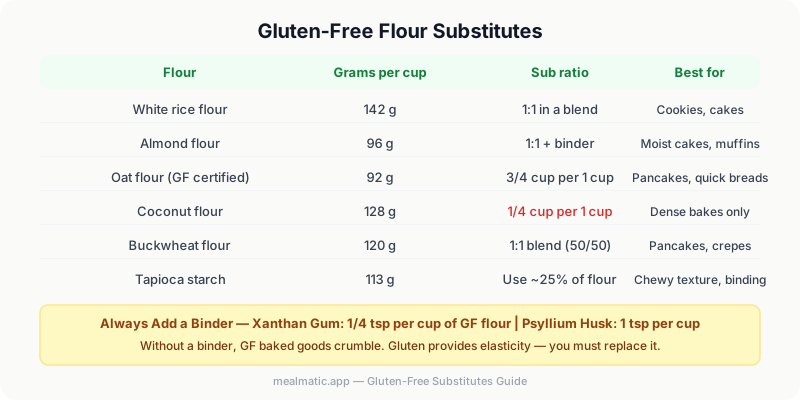
Gluten-free flours vary widely in protein, starch content, and absorbency. The table below uses gram weights from the King Arthur Baking ingredient weight chart, which is the most consistently cited primary source bakers in the U.S. measure against. If you want a side-by-side calculator for ingredient density, our flour conversion tool covers nine flour types.
| Flour | Grams per cup | Sub ratio (vs wheat) | Best for | Avoid for |
|---|---|---|---|---|
| White rice flour | 142 g | 1:1 in a blend | Cookies, cakes, pie crust | Bread (gritty alone) |
| Almond flour | 96 g | 1:1 + extra binder | Moist cakes, muffins, macarons | Anything that must rise tall |
| Oat flour (certified GF) | 92 g | 3/4 cup per 1 cup wheat | Pancakes, quick breads, cookies | Any recipe needing structure |
| Coconut flour | 128 g | 1/4 cup per 1 cup wheat | Dense bakes, pancakes | Light cakes, bread |
| Buckwheat flour | 120 g | 50/50 with another GF flour | Pancakes, crepes, soba-style noodles | Pale cakes (color is dark) |
| Tapioca starch | 113 g | 20–30% of total flour | Chewy texture, binding, crusts | Standalone flour |
| Chickpea flour (besan) | 85 g | 1:1 in savory recipes | Flatbreads, fritters, savory bakes | Sweet bakes (beany flavor) |
| Potato starch | 152 g | 20–30% of total flour | Tenderness, moisture in blends | Standalone flour |
White rice flour
The workhorse of GF baking. White rice flour has a neutral flavor and a fine starch profile that absorbs liquid evenly. On its own it bakes gritty and dry, which is why every commercial 1:1 blend (Bob’s Red Mill, King Arthur Measure for Measure) builds around 50–60% rice flour combined with starches and binders. Use it as the base of a DIY blend, never solo.
Almond flour
Made from blanched, ground almonds. High in fat, protein, and moisture; low in starch. Almond flour produces tender, dense crumb in muffins, macarons, and shortcakes, but it cannot trap gas the way gluten can — recipes built on almond flour stay flat and dense by design. Add an extra egg or 1/4 teaspoon of xanthan gum per cup to keep things from crumbling.
Oat flour
Pure oats are naturally gluten-free, but virtually all commercial oats are cross-contaminated with wheat, barley, or rye during growing, transport, or milling. The Celiac Disease Foundation recommends only certified gluten-free oats for anyone with celiac disease, and notes that a small subset of celiac patients (under 8% by published estimates) react to avenin, the oat-equivalent protein, even when the oats are uncontaminated. If you have celiac disease, introduce oat flour in small amounts and watch for symptoms before scaling up.
Substitute 3/4 cup of oat flour for every 1 cup of wheat flour in pancakes, quick breads, and drop cookies. Oat flour absorbs more liquid as it rests, so let the batter sit 10 minutes before baking.
Coconut flour
The most absorbent flour on this list — and the most punishing if you swap it 1:1. One cup of coconut flour replaces about 1/4 cup of wheat flour in most recipes, with extra eggs and liquid added in. Used correctly, it makes dense, moist bakes (banana bread, brownies, pancakes). Used at full volume, it produces something closer to dry sawdust. If you want to measure ingredients by weight instead of guessing, coconut flour is the one where weight accuracy matters most — small volume errors create big texture errors.
Buckwheat flour
Despite the name, buckwheat is not related to wheat. It is a seed from the same family as rhubarb, naturally gluten-free, with a strong earthy flavor and dark color. It works in a 50/50 blend with a lighter flour (rice, oat) for pancakes, crepes, blini, and soba-style noodles. On its own it bakes too dense and tastes too strong for most palates.
Tapioca starch
Extracted from cassava root. Pure starch with no protein. Tapioca contributes chew and elasticity to GF doughs — the closest thing to gluten texture available — and crisps the outside of pizza crusts and bread. Use it as 20–30% of a flour blend, never the main flour. Too much makes baked goods rubbery.
Chickpea flour (besan)
Ground from dried chickpeas. High in protein, with a distinct beany flavor that disappears in savory cooking but ruins sweet bakes. The standard application is Indian besan-based flatbreads, French socca, fritters, and pakoras. For 1:1 swap in savory recipes — gluten-free pizza dough, falafel binder, savory crackers — chickpea flour holds together better than rice or oat alone.
Potato starch
Pure starch from potatoes (not the same as potato flour, which contains the whole potato). Adds tenderness and moisture to GF blends. Use as 20–30% of a multi-flour blend. Potato starch and tapioca starch are the two ingredients that make a homemade GF blend feel close to all-purpose wheat flour.
Replacing Gluten’s Binding Function
Even with the right flour, GF baked goods crumble unless something replaces gluten’s binding work. This is the step home bakers most often skip — and the single biggest reason their results disappoint. There are three reliable options.
Xanthan gum
A microbial polysaccharide, sold as a fine white powder. Xanthan creates a gel when hydrated and mimics the elastic network gluten provides. King Arthur Baking recommends starting at 1/4 teaspoon of xanthan gum per cup of gluten-free flour for cookies, cakes, and quick breads. For yeast bread or pizza dough that needs more structure, scale up to 1/2 teaspoon per cup. For shortbread or anything where you want a tender, crumbly texture, scale down or skip it. Many commercial GF flour blends — including Bob’s Red Mill 1-to-1 and King Arthur Measure for Measure — already contain xanthan, so check the label before adding more.
Psyllium husk
Whole or finely ground psyllium husk forms a stronger, more elastic gel than xanthan. It is the binder of choice for gluten-free yeast bread because it holds gas during a long rise the way xanthan often cannot. Standard ratio: 1 teaspoon of finely ground psyllium husk per cup of GF flour for soft loaves, scaling up to 1 tablespoon per cup for artisan-style bread. Hydrate the psyllium with the recipe’s water before mixing in flour — undissolved psyllium leaves visible specks.
Flax gel
For anyone avoiding manufactured ingredients, flax gel works as a gentler binder. Combine 1 tablespoon of finely ground flaxseed with 3 tablespoons of warm water and rest 5–10 minutes. The mucilage in the seed coat hydrates and forms a viscous network. Flax gel works in cookies and dense bakes; it is not strong enough to hold yeast bread together on its own.
This step is not optional. GF baked goods made without any binder fall apart at the slightest pressure — they may taste fine the moment you pull them from the oven, but they will not survive being cut, lifted, or stored. Pick one binder, match its dose to the recipe type, and add it before mixing.
Ready-Made GF Flour Blends vs DIY
Commercial 1:1 blends are designed to swap directly for all-purpose wheat flour without recipe changes. Two are widely available in the U.S.:
- Bob’s Red Mill Gluten Free 1-to-1 Baking Flour. Ingredients: sweet white rice flour, whole grain brown rice flour, potato starch, whole grain sorghum flour, tapioca flour, and xanthan gum. The brand explicitly recommends it for cookies, cakes, brownies, muffins, and other chemically leavened bakes — but not for yeast breads.
- King Arthur Measure for Measure Flour. Rice-based blend with xanthan gum included. Designed for quick breads, cookies, cakes, and pancakes; King Arthur sells a separate Gluten-Free Bread Flour for yeasted bakes.
Use a commercial blend when you want predictability and convenience. Use a DIY blend when you want to control ingredient cost, allergens (some blends contain sorghum or pea protein), or texture.
A reliable beginner DIY blend:
- 60% white or brown rice flour
- 20% tapioca starch
- 20% potato starch
- Plus 1/4 teaspoon xanthan gum per cup of finished blend (added at recipe time, not stored in the blend)
Mix by weight, not volume. Store in an airtight container. The blend keeps 6 months in a cool pantry, longer in the freezer.
Gluten-Free Substitutes for Non-Baking Uses
Pasta
Brown rice pasta is the closest texture match to wheat pasta — slightly softer, more prone to overcooking. Cook 1–2 minutes shorter than the package indicates and rinse to stop carryover cooking. Chickpea pasta has more protein and fiber but a firmer, sometimes chalky bite; it works best in cold pasta salads where the texture is less obvious. Lentil and quinoa pastas are also widely available; corn pasta tends to break apart in long-cooked sauces.
Coating and breading
GF breadcrumbs (made from rice or corn-based bread) work as a 1:1 swap for traditional panko or Italian breadcrumbs. Almond flour gives a richer, slightly denser crust on chicken or fish. For thin, crispy coatings, cornstarch alone produces a shatter-crisp texture similar to a tempura batter — used widely in Korean fried chicken.
Thickening sauces
Cornstarch is the standard 1-for-2 swap: 1 tablespoon of cornstarch thickens the same liquid as 2 tablespoons of wheat flour. Mix it with cold water before adding to a hot sauce to avoid lumps (this is called a slurry). Arrowroot and tapioca starch work the same way; arrowroot stays clearer when chilled, which makes it the choice for fruit pie fillings and glazes.
Cross-Contamination Warning
The FDA’s gluten-free labeling rule (21 CFR 101.91), finalized in 2013, sets a 20 ppm threshold for any food labeled “gluten-free,” “free of gluten,” “without gluten,” or “no gluten” in the U.S. That is the lowest level current testing methods can reliably detect, and the level the FDA judges safe for most people with celiac disease. The rule applies to packaged foods sold in the U.S.
Cross-contamination outside the package is the bigger problem. The Celiac Disease Foundation describes celiac disease as a serious autoimmune condition affecting roughly 1 in 100 people worldwide, where even crumbs from a shared cutting board or toaster can trigger intestinal damage. Practical kitchen rules:
- Dedicated toaster, cutting board, and colander for GF cooking, or thorough scrubbing between uses.
- Always-certified GF oats if you have celiac — uncertified oats are routinely contaminated above 20 ppm.
- Read every label every time. Manufacturers reformulate without notice, and an ingredient that was GF last month may not be today.
If celiac and another restriction overlap — celiac plus lactose intolerance is a common pairing because villous damage temporarily reduces lactase production — see our guide on lactose intolerance and what to avoid for the second half of the picture.
Frequently Asked Questions
Q: Can I substitute almond flour 1:1 for wheat flour?
Volume yes, function no. Almond flour matches the cup volume of wheat flour, but it has no gluten and very different moisture absorption. A 1:1 swap in a wheat recipe produces a denser, flatter, sometimes greasy result. Add 1/4 teaspoon xanthan gum per cup and an extra egg, or use a published almond-flour recipe instead of adapting a wheat one.
Q: Do I always need xanthan gum in GF baking?
In nearly every recipe except shortbread, no-rise flatbreads, and a few pancakes, yes. Without xanthan or another binder (psyllium husk, flax gel, extra eggs), GF baked goods crumble at the lightest touch. Many commercial 1:1 GF blends include xanthan already — check the label. If yours does, do not add more.
Q: Is oat flour gluten-free?
Pure oats are naturally gluten-free, but most commercial oats are cross-contaminated during growing or processing. For celiac disease, only buy certified gluten-free oat flour. The Celiac Disease Foundation also notes that a small subset of celiac patients react to avenin, the oat protein, even with uncontaminated oats — introduce oat flour cautiously and watch for symptoms.
Q: Which GF flour is best for bread?
No single flour produces good GF bread on its own. The reliable approach is a blend with a strong binder: about 60% rice flour, 20% tapioca starch, 20% potato starch, plus 1 tablespoon of finely ground psyllium husk per cup of blend. Psyllium holds gas during yeast rise the way xanthan often cannot. King Arthur Gluten-Free Bread Flour is the easiest commercial option.
Q: What’s the best GF substitute for all-purpose flour in a recipe?
A pre-made 1:1 blend like Bob’s Red Mill Gluten Free 1-to-1 Baking Flour or King Arthur Measure for Measure Flour. Both are formulated to swap directly for all-purpose wheat flour in cookies, cakes, brownies, and quick breads. Neither is recommended for yeast bread — for that, use a dedicated GF bread flour or a recipe written from the ground up for psyllium-bound GF dough.
Baking gluten-free and managing other dietary restrictions? MealMatics builds personalized meal plans that work around celiac, NCGS, and multiple food restrictions at once. Start for free →

MealMatics Research & Editorial
Editorial & Nutrition Research Team
The MealMatics editorial team verifies every nutrition article against primary medical sources, including NHS clinical guidelines, NICE CG61, NIDDK, Monash University FODMAP research, and peer-reviewed literature in PubMed.