Low-FODMAP Meal Plan: 7-Day Guide for IBS Relief
Evidence-based 7-day low-FODMAP meal plan for IBS. Includes foods to avoid list, safe foods list, and reintroduction phase guide.
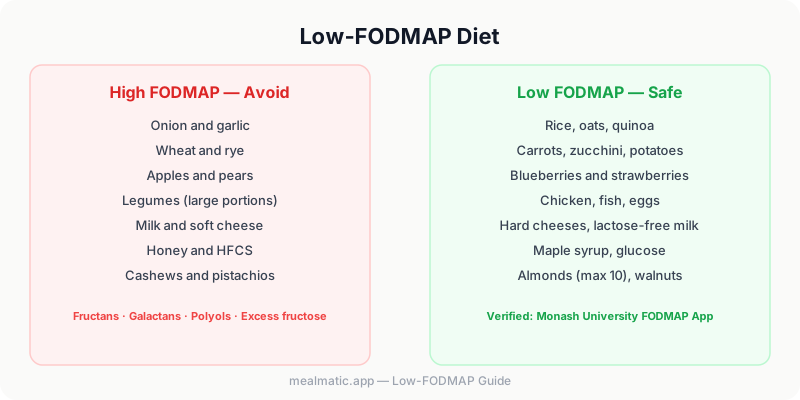
Low-FODMAP Meal Plan: 7-Day Guide for IBS Relief
FODMAP stands for Fermentable Oligosaccharides, Disaccharides, Monosaccharides, and Polyols. They are short-chain carbohydrates that the small intestine absorbs poorly. The acronym was coined at Monash University in Melbourne, where Professor Peter Gibson and Dr Sue Shepherd built the diet protocol that is now used worldwide as a first-line therapy for irritable bowel syndrome.
The diet is not a fad and it is not for everyone. It targets a specific clinical problem: people whose gut sends pain, gas, and bloating signals when fermentable carbs reach the colon. According to Monash University research, IBS symptoms improve in 3 out of 4 people who follow a low-FODMAP diet, which makes it one of the most effective dietary interventions for IBS that has ever been studied.
This guide gives you a 7-day meal plan built only from foods Monash classifies as low FODMAP, plus a list of common high-FODMAP triggers, the cooking workarounds that experienced patients use, and how the reintroduction phase actually works.
What Is the Low-FODMAP Diet?
FODMAPs are not bad foods. They are normal carbohydrates found in apples, onion, garlic, milk, wheat, beans, and many sweeteners. In a healthy gut, they pass through with no consequences. In IBS, two things go wrong at once.
The osmotic effect comes first: FODMAPs travel slowly through the small intestine, pulling water in alongside them. By the time they reach the colon, the gut bacteria ferment them rapidly, producing carbon dioxide, hydrogen, and methane. The extra water plus the gas stretches the intestinal wall. In a person with visceral hypersensitivity, that stretching translates directly into pain, cramping, bloating, and changed bowel habits.
Monash’s protocol is built around three sequential phases. Phase 1 is strict elimination — 2 to 6 weeks of low-FODMAP eating to calm the symptoms. Phase 2 is reintroduction over 6 to 8 weeks, where you systematically test one FODMAP subgroup at a time. Phase 3 is personalization: a long-term diet that excludes only your real triggers and keeps everything else on the table. The third phase is the actual goal. The first phase is a diagnostic tool, not a permanent way of eating.
A registered dietitian is recommended at every phase. A 2022 review in the Journal of Neurogastroenterology and Motility noted that patient-led implementation more than doubled the unintended FODMAP intake during the restriction phase compared to dietitian-led implementation, which often masks the diet’s effect entirely.
High-FODMAP Foods to Avoid
Cutting FODMAPs is not about avoiding a category — it is about avoiding specific foods within most categories. The list below covers the most common offenders verified against the Monash University FODMAP app.
| Food | FODMAP type | Why it triggers IBS |
|---|---|---|
| Onion (all varieties) | Fructans | Highly fermentable; triggers in tiny amounts |
| Garlic | Fructans | Fermentable carbs concentrated in the bulb |
| Wheat (bread, pasta) | Fructans | Fructans plus gluten in standard wheat products |
| Rye and barley | Fructans | Same fructan content as wheat |
| Apples, pears | Excess fructose, sorbitol | Fructose to glucose ratio overloads transporters |
| Mangoes, watermelon, dried fruit | Excess fructose | Same overload mechanism |
| Cherries, peaches, plums | Sorbitol, polyols | Polyols ferment slowly and pull water |
| Milk, yogurt, ice cream | Lactose | Disaccharide; bacterial fermentation |
| Soft cheeses (ricotta, cottage) | Lactose | High residual lactose |
| Honey, high-fructose corn syrup | Excess fructose | Pure fructose load |
| Sugar-free gum, mints | Polyols | Sorbitol, mannitol, xylitol, erythritol |
| Cashews, pistachios | GOS, fructans | Galactans plus fructans |
| Red kidney beans, baked beans | GOS | Galacto-oligosaccharides |
| Mushrooms, cauliflower | Mannitol | Polyol; ferments fast |
| Asparagus, leek, spring onion (white parts) | Fructans | Fructans concentrated in the white bulb |
A practical rule: when you read a recipe, the first two things to flag are usually onion and garlic. They appear in almost every savory dish in the Western diet, and Monash classifies even small portions as high FODMAP.
Low-FODMAP Foods That Are Safe
Plenty of food is fine. The trick is sticking to verified safe portions — Monash uses a traffic-light system in their app, and “green” means cleared at the listed serving.
Grains: white and brown rice, rolled oats (½ cup uncooked = 52 g), quinoa, gluten-free pasta, sourdough spelt bread (2 slices), rice cakes, corn tortillas.
Vegetables: carrots, zucchini, cucumber, bell pepper (red), eggplant, lettuce, spinach, bok choy, green beans, potatoes, sweet potato (½ cup), tomatoes, kale, parsnip, the green tops of spring onion.
Fruits: blueberries, strawberries, raspberries (small portions), grapes, oranges, mandarins, kiwifruit, cantaloupe, pineapple, banana (small, firm), passionfruit.
Protein: chicken, beef, pork, fish, shellfish, eggs, firm tofu, tempeh. Plain unprocessed meat is always safe — the FODMAPs hide in marinades and sauces.
Dairy and alternatives: lactose-free milk, almond milk (unsweetened), hard cheeses (cheddar, parmesan, Swiss), brie, camembert, feta, butter, lactose-free yogurt.
Sweeteners: maple syrup, table sugar (sucrose), glucose, dark chocolate (small portions), rice malt syrup.
Nuts and seeds: almonds (max 10 nuts), walnuts, pecans, pumpkin seeds, sunflower seeds, peanuts.
When you adapt a familiar recipe, measure cooking portions accurately — Monash safe-serving thresholds are exact, and a heaped cup of canned chickpeas rather than a level quarter-cup turns a safe meal into a triggering one.
7-Day Low-FODMAP Meal Plan
Every meal below uses only Monash-verified low-FODMAP foods at safe portions. Garlic is replaced with garlic-infused olive oil throughout. Onion is replaced with the green tops of spring onion or chives.
| Day | Breakfast | Lunch | Dinner | Snack |
|---|---|---|---|---|
| Mon | Rolled oats (½ cup) with lactose-free milk, blueberries, walnuts | Grilled chicken on rice with carrot and cucumber salad, lemon-olive oil dressing | Baked salmon, roasted potatoes, sautéed zucchini in garlic-infused oil | Orange + 10 almonds |
| Tue | Scrambled eggs, sourdough spelt toast (1 slice), cherry tomatoes | Quinoa bowl with grilled chicken, spinach, feta, olive oil | Stir-fried beef with bell pepper, bok choy, ginger, over rice | Lactose-free yogurt with strawberries |
| Wed | Lactose-free yogurt, oats, kiwi, maple syrup | Tuna and rice salad with cucumber, carrot, olives, lemon | Baked chicken thighs, mashed potato, steamed green beans | Rice cakes with peanut butter |
| Thu | Smoothie: lactose-free milk, banana (small firm), strawberries, oats | Chicken and quinoa salad with roasted bell pepper, feta, fresh basil | Grilled cod, sweet potato wedges, sautéed spinach | Hard cheese (cheddar) + grapes |
| Fri | Eggs, sautéed cherry tomatoes, sourdough spelt toast | Rice noodle bowl with shrimp, bok choy, carrot, ginger-soy dressing | Pan-seared pork chop, mashed potato, roasted carrot | Pineapple + 10 walnut halves |
| Sat | Pancakes from gluten-free flour, lactose-free milk, maple syrup, blueberries | Roast beef on sourdough spelt with lettuce, cucumber, mustard | Grilled lamb skewers, quinoa, Mediterranean salad (cucumber, tomato, feta, olives) | Dark chocolate (30 g) + raspberries |
| Sun | Omelet with feta, spinach, cherry tomatoes | Chicken soup (homemade with garlic-infused oil, carrot, celery — max 10g, parsnip, rice) | Roast chicken, roasted potato, steamed kale | Mandarin + walnuts |
Hydration: water, plain coffee, peppermint tea, dry red or white wine in moderation. Skip apple juice, mango juice, sweetened sodas, and chamomile tea, all of which Monash flags as high FODMAP.
Low-FODMAP Cooking Tips
The rules feel restrictive at first. After a week most people develop a small toolkit of substitutions that works for most everyday recipes.
Garlic-infused oil. FODMAPs are water-soluble, not oil-soluble. Heat olive oil with smashed garlic cloves over low heat for 5 minutes, then strain out the garlic. The oil keeps the flavor without the fructans. Commercial garlic-infused olive oils are sold by Coles, Cobram Estate, and Fody Foods — check the label says “infused” not “garlic oil with garlic pieces.”
Spring onion tops. The white bulbs are fructan-loaded. The green tops are low FODMAP and taste almost identical when sliced thin and added at the end of cooking. Same logic with leek: dark green parts only, never the white.
Canned chickpeas, drained and rinsed. Most legumes are too fructan-heavy for the elimination phase, but canned chickpeas drained and rinsed, served at ¼ cup (42 g), are low FODMAP per Monash. The canning liquid leaches the GOS into the brine, which is why rinsing matters.
Read labels for hidden onion and garlic. Stock cubes, soy sauce, mayonnaise, gravy granules, and most jarred sauces use onion and garlic powder as base flavor. Use Massel chicken stock cubes or Fody Foods stock — both certified low FODMAP.
Portion size is the diet. Almonds are low FODMAP at 10 nuts and high FODMAP at 20. Sweet potato is fine at half a cup and triggering at a full cup. Cantaloupe is safe at 90 g and triggering at 200 g. The Monash app shows the cliff for each food.
If you also need help managing other dietary restrictions in parallel — gluten-free, dairy-free, vegan — the same portion-control logic applies. Our guide on IBS trigger foods covers what to do when low FODMAP overlaps with other gut conditions like SIBO, coeliac, or histamine intolerance.
The Reintroduction Phase
Phase 1 is not the diet. Staying low FODMAP forever damages the gut microbiome — the bacteria that ferment FODMAPs are also the ones that produce short-chain fatty acids, the fuel for colon cells. The point of elimination is to confirm FODMAPs are your trigger and to give the gut a quiet baseline. From there, you reintroduce.
Reintroduction takes 6 to 8 weeks. You test one FODMAP subgroup at a time, holding everything else strict. The order varies — many dietitians start with mannitol (mushrooms) or lactose (milk) because they are easy to isolate. Day 1: small dose. Day 2: medium dose. Day 3: large dose. Watch symptoms for 24 to 48 hours. If symptoms flare, stop and let the gut settle for 3 days. Then move to the next subgroup.
The Monash University FODMAP app is the standard tool for this phase. It lists test foods for each subgroup at the right doses and tracks your responses. Photos of symptom diaries, food logs, and the test results go to the dietitian for interpretation.
After 6 to 8 weeks of reintroduction, you should know which subgroups your gut tolerates and which it does not. From there, Phase 3 — personalization — is your real long-term diet. Most people end up tolerating most FODMAPs at moderate doses, restricting only one or two specific groups, and feel materially better than they did at baseline. Tolerance can shift over months, so retesting once a year on a problem food is reasonable.
When to See a Dietitian
If you are reading this guide as a starting point, find a dietitian trained in FODMAP before you commit. Monash maintains a directory of FODMAP-trained dietitians worldwide on their website. Clinical implementation alone takes 4 to 6 appointments across 3 to 6 months — Phase 1 baseline and confirmation, Phase 2 reintroduction interpretation, and Phase 3 personalization. Self-implementation works for some people, but the failure mode is silent: you eat “low FODMAP” with hidden onion powder in the stock and conclude the diet does not work for you, when in fact you never followed it.
Get a confirmed IBS diagnosis from a gastroenterologist before starting. Symptoms that resemble IBS — blood in stool, unexplained weight loss, fever, anemia — can be coeliac, inflammatory bowel disease, or colorectal cancer. The low-FODMAP diet treats IBS, not the alarm-symptom conditions, and starting it before diagnosis can mask the problem.
Frequently Asked Questions
Q: How long should I stay on the low-FODMAP elimination phase?
Two to six weeks. Monash recommends 2 weeks at minimum to see if symptoms respond, with 6 weeks as the upper limit before nutritional risks (low fiber, restricted prebiotics) start to outweigh the benefit. If symptoms have not improved by 6 weeks, FODMAPs are probably not your trigger and you should discuss alternatives with your gastroenterologist.
Q: Is gluten-free the same as low FODMAP?
No. Gluten-free is a protein restriction; low FODMAP is a carbohydrate restriction. Wheat happens to be both high in fructans (a FODMAP) and contains gluten, which is why low-FODMAP diets often look gluten-free in practice. But many gluten-free foods (apples, honey, cashews, sugar-free gum) are still high FODMAP, and many gluten-containing foods (sourdough spelt at 2 slices) are low FODMAP. The two diets are not interchangeable.
Q: Can I drink coffee on the low-FODMAP diet?
Plain black coffee or espresso is low FODMAP. Lattes, cappuccinos, and flat whites become high FODMAP because of the lactose in regular milk — switch to lactose-free milk or almond milk and they are fine. Caffeine itself is a separate issue: it stimulates gut motility and can worsen IBS symptoms in some patients regardless of FODMAP content.
Q: Are oats low FODMAP?
Rolled oats are low FODMAP at ½ cup (52 g) uncooked per serving, per the Monash app. At ¾ cup (78 g) or more they become high in fructans. Quick oats have a smaller safe serving (about 23 g uncooked), so rolled oats are the better choice for breakfast portions. Steel-cut oats are low FODMAP at similar small servings.
Q: What about wine on the low-FODMAP diet?
Dry red and white wine are low FODMAP at one standard glass (150 ml). Sweet wines, dessert wines, and fortified wines like sherry or port carry higher residual sugar (often fructose) and become high FODMAP. Beer is generally low FODMAP for one bottle but high in some lagers because of malted grains. Spirits without sugary mixers are fine.
Q: Should I do low FODMAP without a dietitian?
You can, but the failure rate is much higher. The most-cited issue in clinical reviews is hidden FODMAPs — onion powder in stock, garlic in mayo, fructose in “natural flavoring” — that quietly continue triggering symptoms during what is supposed to be the elimination phase. A FODMAP-trained dietitian costs 4 to 6 sessions across the protocol, catches those issues, and structures the reintroduction phase so you actually learn what your real triggers are. If cost is a barrier, the Monash FODMAP app plus a registered dietitian for one consult at the start is the minimum viable version.
Managing IBS and other dietary restrictions? MealMatics builds personalized low-FODMAP meal plans with meal timing and shopping lists built in. Start for free →

MealMatics Research & Editorial
Editorial & Nutrition Research Team
The MealMatics editorial team verifies every nutrition article against primary medical sources, including NHS clinical guidelines, NICE CG61, NIDDK, Monash University FODMAP research, and peer-reviewed literature in PubMed.