Low-Histamine Diet Meal Plan: 7-Day Guide for Histamine Intolerance
7-day low-histamine diet meal plan with complete high-histamine foods to avoid, safe foods list, and cooking tips for histamine intolerance.
Low-Histamine Diet Meal Plan: 7-Day Guide for Histamine Intolerance
Histamine intolerance is what happens when your body cannot keep up with the histamine arriving from your gut. The enzyme that breaks dietary histamine down — diamine oxidase, or DAO — is made by mature cells lining the small intestine. When DAO activity is low or blocked, histamine slips past the gut barrier into circulation and produces a strange, scattered list of symptoms: flushing, headaches, hives, nasal congestion, gut cramping, palpitations, brain fog. Reduced DAO activity has been linked to genetic polymorphisms in the AOC1 gene, gut mucosal damage from inflammation or dysbiosis, and certain medications that block the enzyme directly (review in PMC, 2025).
The condition is often confused with mast cell activation syndrome (MCAS). The distinction matters. In histamine intolerance, the supply side is the problem: too much histamine coming in from food, not enough enzyme to clear it. In MCAS, the body’s own mast cells release excessive histamine and many other mediators from the inside, often triggered by things that contain no histamine at all — supplements, smells, light, temperature shifts (Cleveland Clinic on histamine intolerance). MCAS reactions are unpredictable and multi-system; histamine intolerance reactions follow what you ate. People can have both, and dietary management overlaps, but a low-histamine diet alone will not control MCAS.
The other thing worth saying upfront: the American Academy of Allergy and Immunology has not formally accepted histamine intolerance as a diagnosis, and the supporting evidence is still thin in places. The diet works as an elimination trial. If symptoms drop after 4 weeks of strict low-histamine eating and return on reintroduction of suspect foods, the working hypothesis holds. If they do not, the cause is elsewhere — IBS, MCAS, food allergy, anxiety — and you need a different workup.
High-Histamine Foods to Avoid
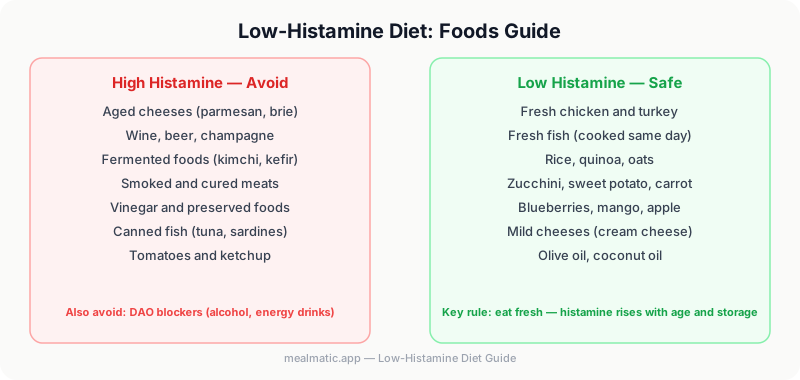
Histamine accumulates in food through one of three routes: bacterial fermentation, aging, or microbial decay. Fresh food contains very little histamine; the same food, after days of storage or any fermentation step, can contain a thousand times more. The list below covers the categories that are flagged consistently across the SIGHI Swiss Interest Group food list, the Cleveland Clinic guidance, and recent peer-reviewed reviews.
| Category | Examples | Why it triggers |
|---|---|---|
| Aged cheeses | Parmesan, brie, camembert, blue cheese, gouda | Ripening time = bacterial histamine production |
| Fermented foods | Kimchi, kefir, kombucha, sauerkraut, miso, soy sauce, yogurt | Microbial conversion of histidine to histamine |
| Smoked and cured meats | Salami, pepperoni, bacon, prosciutto, smoked salmon, hot dogs | Curing and storage time accumulate histamine |
| Canned and preserved fish | Tuna, sardines, anchovies, mackerel, herring | Slow bacterial spoilage during storage |
| Vinegar and vinegar-based foods | Wine vinegar, balsamic, ketchup, mustard, relish, brined cucumbers | Acetic acid fermentation |
| Alcoholic beverages | Wine, beer, champagne, fermented spirits | Histamine in the drink + DAO blockade |
| Leftovers | Cooked meat or fish stored more than 24 hours | Bacterial accumulation increases with time |
Leftovers are the most under-recognized trigger on the list. A piece of grilled chicken eaten the same day is low histamine. The same chicken pulled from the fridge two days later can produce symptoms. The SIGHI food guidance is blunt about this: when in doubt, eat fresh or freeze immediately (SIGHI food list).
Foods That Release Histamine (Histamine Liberators)
Histamine liberators are a separate category. They contain little or no histamine themselves, but they are thought to trigger your own mast cells to release stored histamine. The list traditionally includes:
- Tomatoes and tomato products (sauce, paste, ketchup)
- Citrus fruits — lemon, orange, grapefruit, lime
- Strawberries, pineapple, papaya
- Spinach, eggplant, avocado
- Shellfish — shrimp, lobster, crab
- Chocolate and cocoa
- Most nuts (walnuts, cashews are the most-cited)
The science here is weaker than for high-histamine foods. A 2021 review noted that there are no human clinical studies confirming that these foods actually release endogenous histamine, and the hypothesis rests on a small number of in vitro and animal experiments. Many practitioners still recommend cutting liberators during the 4-week elimination because the diet is meant to identify a personal pattern, not to enforce a fixed scientific consensus. If you do not react to tomatoes after a careful reintroduction, they go back on the menu.
DAO Blockers to Avoid
Some foods and drugs do not contain histamine but actively suppress DAO, the enzyme that should be clearing dietary histamine in the gut. Even a normally tolerated meal can trigger symptoms if you also consumed a DAO blocker.
- Alcohol — every form. Wine and beer are the worst offenders because they combine high histamine content with strong DAO inhibition. Spirits without histamine still block the enzyme.
- Energy drinks — combination of caffeine, taurine, and other amines competes with DAO substrate.
- Other biogenic amines — putrescine and cadaverine, found in spoiled or aged protein, are competitive substrates and slow histamine breakdown (Frontiers in Nutrition, 2022).
- Certain medications — non-steroidal anti-inflammatories, some antibiotics (clavulanic acid, doxycycline), antidepressants, and antihypertensives have been documented as DAO inhibitors. Discuss with your prescriber before changing anything; do not stop medication on your own.
Low-Histamine Foods That Are Safe
Plenty of food is fine. The defining rule is freshness, not category.
Fresh meats: Chicken, turkey, pork, lamb, and beef — eaten the same day they are cooked, or frozen immediately if not. Avoid pre-cooked deli meat.
Fresh fish: Cooked the same day it was bought (or thawed quickly from frozen). Histamine levels in fish climb fast above refrigerator temperature, which is why scombroid poisoning — the textbook example of acute histamine reaction — comes from fish, not cheese.
Eggs: Most people tolerate eggs. Some sensitive individuals react to the white; whole eggs are usually fine and worth a personal trial.
Grains: Rice (white and brown), quinoa, oats, corn, millet, buckwheat, gluten-free pasta. Avoid sourdough and other long-fermented breads.
Vegetables: Most vegetables that are not on the liberator list — zucchini, sweet potato, carrot, broccoli, cabbage, lettuce, cucumber, beetroot, peppers, onion, garlic, asparagus, green beans, peas. Cook fresh and refrigerate immediately if there are leftovers.
Fruits: Blueberries, blackberries, mango, apple, pear, melon (cantaloupe, honeydew, watermelon), peach, apricot, fresh figs.
Dairy: Pasteurized fresh milk, butter, fresh cream cheese, mozzarella, mascarpone, ricotta — all aged less than the typical hard-cheese ripening cycle. Skip yogurt and aged cheese.
Oils and fats: Olive oil, coconut oil, avocado oil (the oil itself is fine even though whole avocado is on the liberator list), butter, ghee.
Beverages: Filtered water, herbal teas (chamomile, ginger, peppermint, rooibos), fresh coconut water. Avoid black and green tea — both block DAO.
When you adapt a familiar recipe to a low-histamine version, measure recipe portions accurately so substitutions land in the same range as the original. Cooking by feel works fine for fresh stir-fries; it stops working when you are scaling a baked recipe or replacing one type of dairy with another.
7-Day Low-Histamine Meal Plan
Every meal below uses only foods from the safe list. Cook fresh, eat the same day. If you want to batch-cook, freeze the portion you will not eat within 24 hours immediately after cooking, and reheat from frozen.
| Day | Breakfast | Lunch | Dinner |
|---|---|---|---|
| Mon | Oatmeal with fresh blueberries and pear | Grilled chicken with rice and steamed broccoli | Pan-seared white fish, quinoa, sautéed zucchini |
| Tue | Scrambled eggs, sourdough-free toast, mango slices | Quinoa bowl with fresh chicken, cucumber, olive oil | Pork loin, mashed sweet potato, green beans |
| Wed | Rice porridge with apple and cinnamon | Turkey patty (made fresh), white rice, carrot salad | Lamb chops, roasted root vegetables, fresh herbs |
| Thu | Buckwheat pancakes with fresh peach | Chicken and rice soup (made same morning) | Oven-baked white fish, millet, sautéed cabbage |
| Fri | Eggs and rice cakes with butter, mango | Beef stir-fry (fresh-cut), rice, peppers, ginger | Fresh salmon (cooked same day), quinoa, asparagus |
| Sat | Smoothie: blueberries, mango, coconut water | Lamb and rice pilaf with fresh herbs | Roast chicken, mashed potato, broccoli |
| Sun | Oatmeal with fresh apple and coconut oil | Grilled pork chop, rice, cucumber-mint salad | Fresh white fish curry (made today), quinoa |
Notes on the plan. There is no leftover meat in this menu — every protein is cooked the day it is eaten. Citrus is replaced by herbs (mint, basil, dill, parsley) for flavor. The fish must be either fresh or frozen-and-thawed-quickly; do not buy fish that has been sitting on ice at the supermarket counter for an unknown period. If you tolerate dairy, fresh ricotta or mozzarella with peach makes a reasonable dessert.
Freshness Is Everything
The one rule that beats every food list is freshness. Histamine accumulates in protein-rich food as bacteria break amino acids down — in particular, histidine to histamine. The longer food sits, the warmer it has been, the more bacteria it has touched, the higher the histamine content goes. This is why a freshly grilled chicken breast is fine and the same chicken in a sandwich the next day is not.
The practical workflow:
- Buy meat, fish, and dairy in small amounts you will use in 1 to 2 days.
- Cook proteins the day you buy them when possible.
- If you cook more than one portion, freeze the extra immediately — not after dinner, not the next morning, immediately. The fridge is a slow histamine factory.
- Reheat from frozen rather than from refrigerator storage where you can.
- Pressure cooking and quick steaming preserve fewer histamine-friendly properties than slow-cooking, which holds protein at warm temperatures for hours and accelerates bacterial breakdown.
The other source of trouble is canned and preserved fish. Canned tuna and sardines are flagged on every histamine intolerance food list because the canning process itself, and especially the storage time after canning, leaves the product with a histamine load that fresh fish never reaches. Fresh tuna eaten the same day is fine for most people; canned tuna is not.
For people managing several gut conditions at once — IBS, SIBO, coeliac alongside histamine intolerance — the dietary restrictions stack. Our guide on other gut health conditions covers the overlap and how to layer multiple restrictions without ending up with three foods you can eat.
Frequently Asked Questions
Q: How do I know if I have histamine intolerance vs a food allergy?
Food allergy is an immediate IgE-mediated immune reaction — hives, swelling, anaphylaxis — to a specific protein, and a single bite is usually enough to trigger it. Histamine intolerance is a dose-and-cumulative-load reaction: a small piece of cheese might be fine, a whole portion plus a glass of wine triggers symptoms hours later. Allergy testing (skin prick, specific IgE) is normal in histamine intolerance because the immune system is not the problem. The diagnostic move is a 4-week elimination of high-histamine foods followed by reintroduction; if symptoms drop and return with the suspect food, the pattern fits.
Q: Can I ever eat aged cheese on a low-histamine diet?
Not during the strict 4-week elimination phase. After reintroduction, individual tolerance varies enormously. Some people add a small amount of mild aged cheese back without symptoms; others react to a single bite of parmesan. The longer the cheese has aged, the higher the histamine content — so a young gouda might be tolerated where blue cheese or 24-month parmesan is not. Test one cheese at a time, in a small amount, on a day with no other histamine load.
Q: How long before symptoms improve on a low-histamine diet?
Most peer-reviewed protocols use a 4-week elimination phase. People who respond often see meaningful improvement within 1 to 2 weeks, with full effect by week 4. If symptoms have not changed after 4 weeks of strict adherence — including cutting alcohol, leftovers, and aged products — histamine is probably not the driver, and the workup needs to look elsewhere (MCAS, IBS with visceral hypersensitivity, anxiety-driven gut symptoms, true food allergy).
Q: Is canned tuna high in histamine?
Yes. Canned and preserved fish — tuna, sardines, anchovies, mackerel, herring — are consistently flagged as some of the highest-histamine foods on every clinical list. The histamine builds up during the canning process and continues to accumulate during storage. Fresh tuna cooked the same day is much lower in histamine and is tolerated by many people who cannot eat canned tuna. The exception is scombroid fish (tuna, mackerel, mahi-mahi) that has been improperly stored even briefly — those species accumulate histamine fast even fresh.
Q: Can I take antihistamines instead of changing my diet?
Antihistamines block H1 receptors and can blunt symptoms, but they do not fix the underlying enzyme deficiency or the dietary histamine load. They are useful as short-term relief during reintroduction testing or for specific triggers you cannot avoid (a wedding, a work dinner). For day-to-day management, dietary control plus DAO supplementation (porcine kidney DAO with vitamin C is the best-studied formulation, per a 2019 trial) is what most clinicians recommend. Talk to your doctor before starting any supplement, especially if you take other medications.
Managing histamine intolerance alongside other dietary restrictions? MealMatics builds personalized meal plans that exclude histamine triggers, aged foods, and multiple food restrictions at once. Start for free →

MealMatics Research & Editorial
Editorial & Nutrition Research Team
The MealMatics editorial team verifies every nutrition article against primary medical sources, including NHS clinical guidelines, NICE CG61, NIDDK, Monash University FODMAP research, and peer-reviewed literature in PubMed.